Francisco Goya, the acclaimed Spanish painter of the late 18th and early 19th centuries, left an indelible mark on the art world with his iconic depictions of the Majas.
The Majas, a series of captivating paintings, embody a unique blend of beauty, allure, and enigmatic charm. Goya’s masterful brushwork and meticulous attention to detail have immortalized these figures, making them a subject of fascination for art enthusiasts.
In this essay, we delve into the captivating world of Goya’s Majas, exploring their significance, symbolism, and the enduring legacy they hold in the realm of art.
The Enigmatic Allure of the Majas
At the heart of Goya’s exploration lies his fascination with the female form, and the Majas serve as a testament to his profound understanding of their allure. The Majas are characterized by their captivating gazes, sensuous attire, and enigmatic expressions that invite viewers to delve deeper into their stories. Goya’s masterful use of light and shadow adds depth and mystery to these paintings, further enhancing their allure.
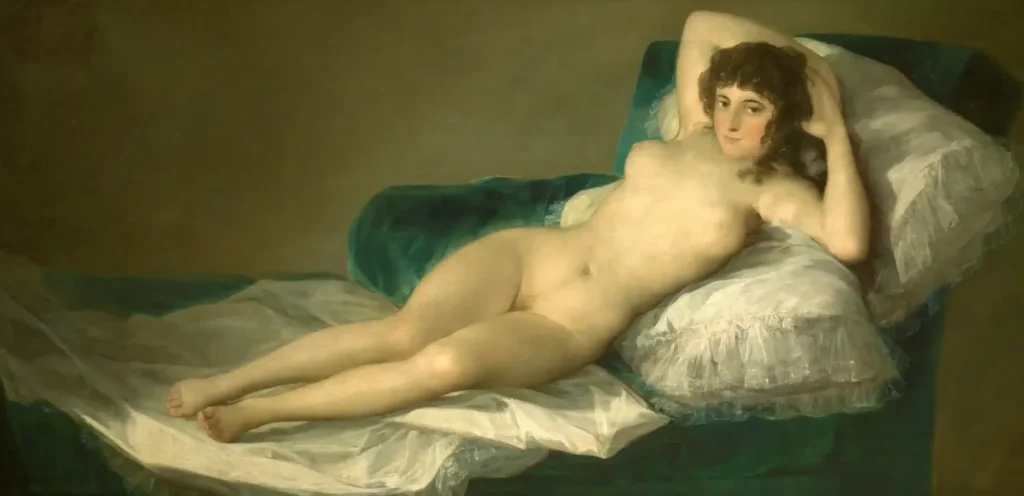
One of Goya’s most renowned Maja paintings is «La Maja Desnuda» (The Naked Maja), a provocative portrayal of a reclining nude woman. In this painting, Goya’s brushwork skillfully captures the curves and contours of the female body, celebrating its beauty and sensuality. The Maja’s direct gaze challenges the viewer, evoking a sense of intrigue and mystery.
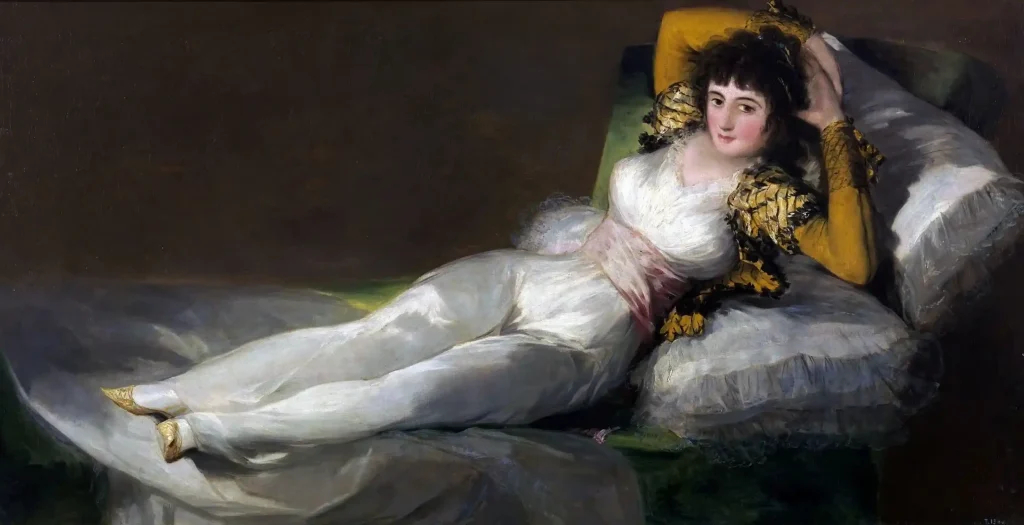
Contrasting with the exposed vulnerability of «La Maja Desnuda,» Goya presents «La Maja Vestida» (The Clothed Maja), where the same woman is depicted clothed in a traditional Spanish gown. This painting exudes elegance and poise, while still preserving the enigmatic quality of the Maja’s gaze. The contrast between the two paintings invites contemplation on the complexity of human nature and the masks we wear in different aspects of our lives.
Social Commentary and Symbolism
Beyond their aesthetic appeal, Goya’s Majas serve as vehicles for social commentary. During Goya’s time, Spain was undergoing significant political and social changes. The Majas, with their confident gazes and unconventional beauty, challenged societal norms and offered a critique of the status quo.
The term «Maja» was originally associated with women of lower social status, often linked to courtesans or women of the streets. By portraying the Majas as subjects of his art, Goya elevated their status and challenged the prevailing social hierarchies. This act of defiance serves as a powerful statement, questioning the conventional notions of beauty and worth dictated by society.
Goya’s Majas also explore the duality of public and private persons. The contrast between the naked and clothed Maja represents the tension between the outward appearance and the hidden depths of a person’s true self. Goya invites viewers to question the authenticity of the facades we present to the world, prompting introspection about the complexities of identity and self-representation.
Furthermore, Goya’s Majas are not mere objects of desire but active participants in the narrative. Their direct gazes convey a sense of agency and defiance, challenging the traditional roles and expectations imposed on women during that era. Goya’s portrayal of the Majas as strong, independent figures reflects his progressive views on gender and power dynamics.
Who is behind the Nude Maja?
The exact identity of the person behind «La Maja» is not fully confirmed. However, there are several theories and speculations about who could be the model in Francisco de Goya’s painting.
One of the most popular theories suggests that the woman depicted in «La Maja» could be Pepita Tudó, a lover and muse of Goya. It is believed that Pepita Tudó was a young woman from a lower social class who became an important figure in the artist’s life. Some believe that Goya portrayed her in several of his paintings, including «La Maja Desnuda.»
Other theories suggest that the model could be Goya’s own wife, Josefa Bayeu, or even a combination of various models. Since Goya did not reveal the identities of his models in his works, the mystery behind the woman in «La Maja Desnuda» has persisted over time.
It is important to note that, due to the lack of conclusive historical evidence, the identity of the model in «La Maja Desnuda» remains a subject of debate and speculation among art experts.
The Enduring Legacy
Goya’s Majas continue to captivate audiences to this day, transcending the boundaries of time and space. Their enigmatic beauty and underlying social commentary have made them an enduring symbol of feminine strength, independence, and resilience. The Majas have inspired countless artists across various mediums, leaving an indelible mark on the art world.
In contemporary society, the influence of Goya’s Majas can be seen in fashion, photography, and popular culture. They symbolize the celebration of diverse beauty, challenging traditional norms and empowering individuals to embrace their unique identities.
In conclusion
Goya’s Majas, with their captivating allure and underlying social commentary, hold a timeless fascination for art enthusiasts. Through their enigmatic gazes and powerful symbolism, these paintings continue to inspire, challenge, and ignite the imagination of viewers, leaving an indelible legacy in the annals of art history.