Leonardo da Vinci: The Life and Legacy of a Renaissance Genius
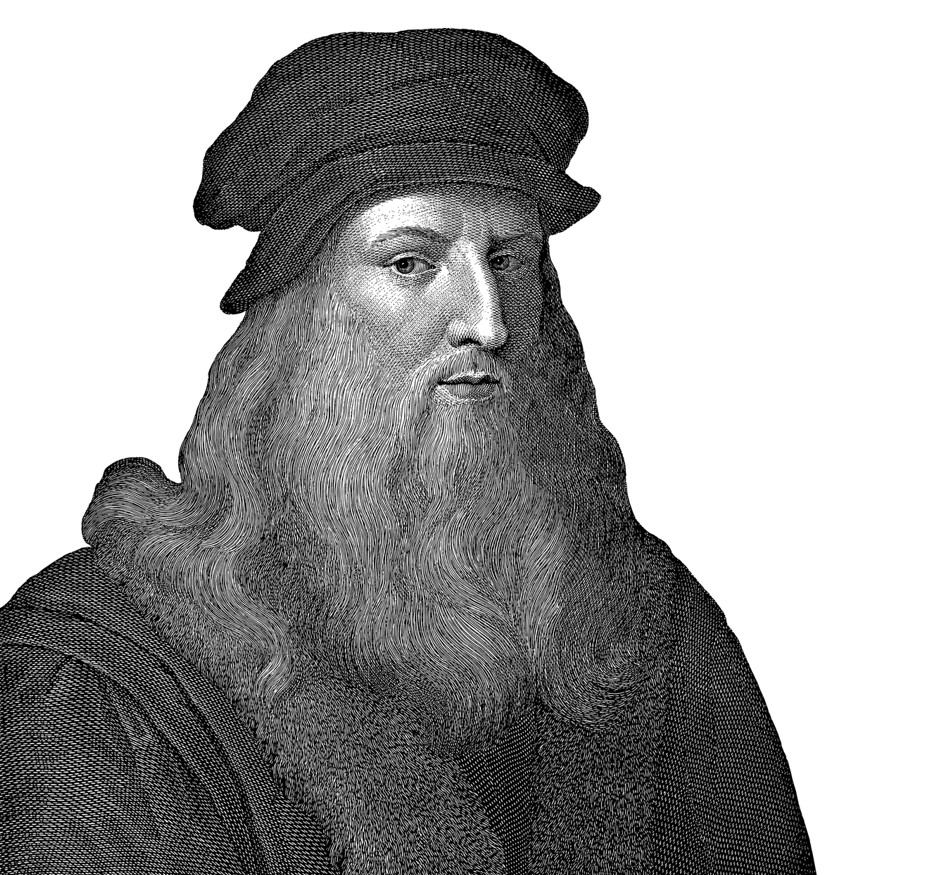
Leonardo da Vinci is one of the most well-known figures in history, known not only for his exceptional art but also for his engineering, scientific and philosophical work.
Born in the small town of Vinci, Italy, in 1452, Leonardo grew up to become a man who was well ahead of his time. His life was full of fascinating events and remarkable achievements, and in this essay, we will take a closer look at his life and work.
Leonardo was a true Renaissance man, with talents and interests that spanned a wide range of fields. His contributions to art, science, and engineering continue to inspire people to this day, and his life and work have become the stuff of legend. While there is much that we still do not know about Leonardo, one thing is clear: he was a remarkable and gifted individual who left an indelible mark on history.
Leonardo was born to Ser Piero da Vinci, a notary, and Caterina, a peasant woman. Due to his parents’ unconventional relationship, Leonardo was not allowed to take on his father’s last name. As a child, he showed a strong aptitude for drawing and was soon apprenticed to Andrea del Verrocchio, a prominent artist in Florence.
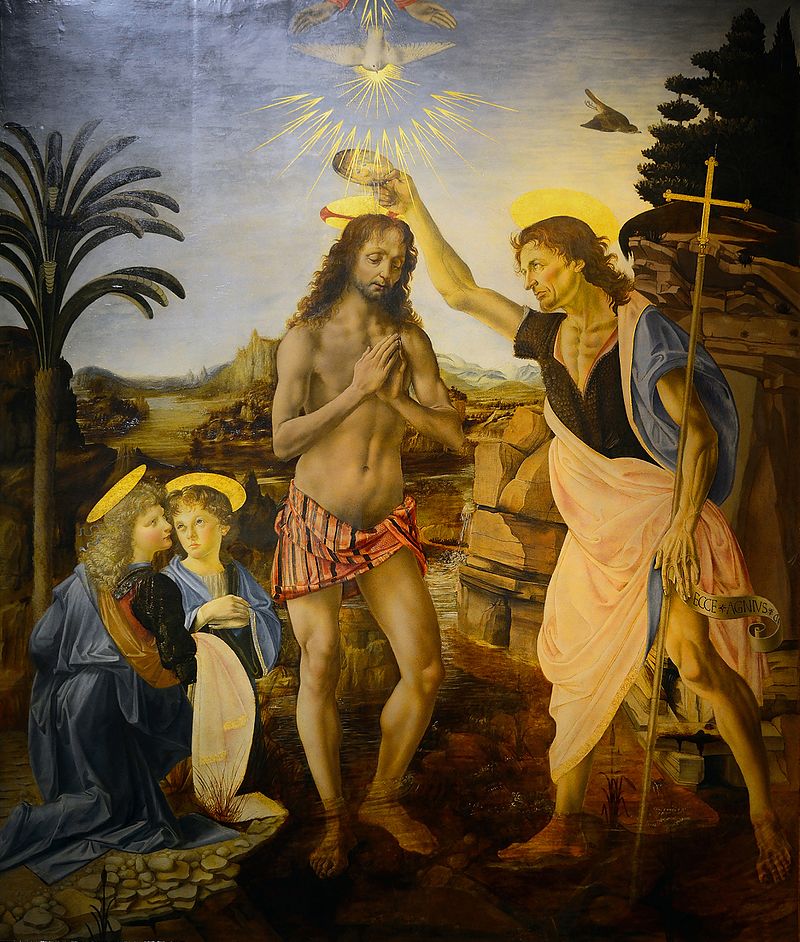
Verrocchio recognized Leonardo’s talent and allowed him to work on many important projects. One of the earliest examples of his work was the angel that he painted in Verrocchio’s «Baptism of Christ» painting. According to legend, Verrocchio was so impressed with the angel that he vowed never to paint again, believing that he could never equal Leonardo’s talent.
The Baptism of Christ by Verrocchio & Leonardo da Vinci
Early Artistic Works
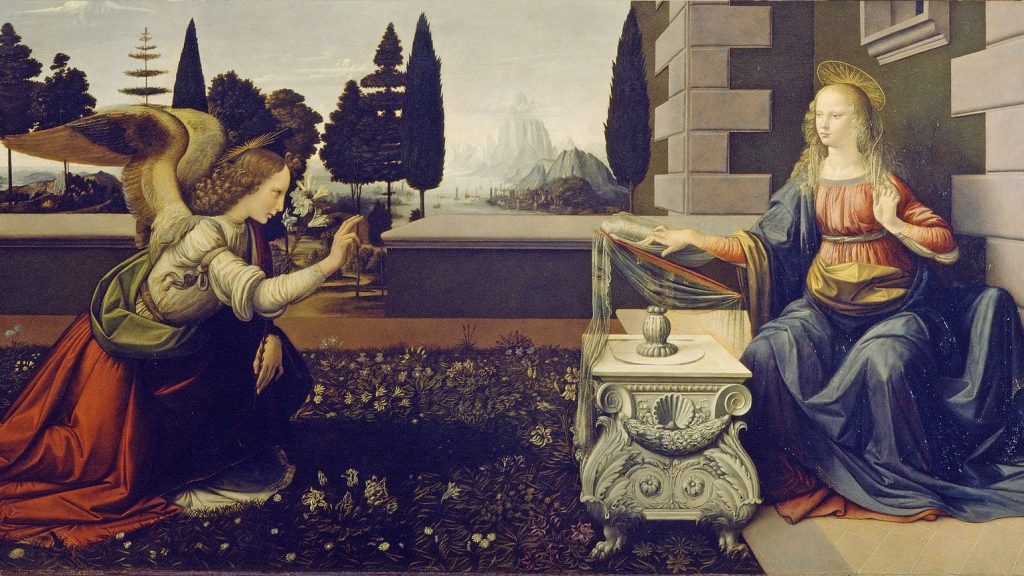
Leonardo continued to work with Verrocchio for many years, honing his skills as an artist. He created many beautiful paintings and sculptures during this time, including «The Annunciation» and «The Adoration of the Magi«. However, he was always looking for new challenges and soon became interested in other fields such as science and engineering.
The Annunciation by Leonardo da Vinci
Engineering and Scientific Work
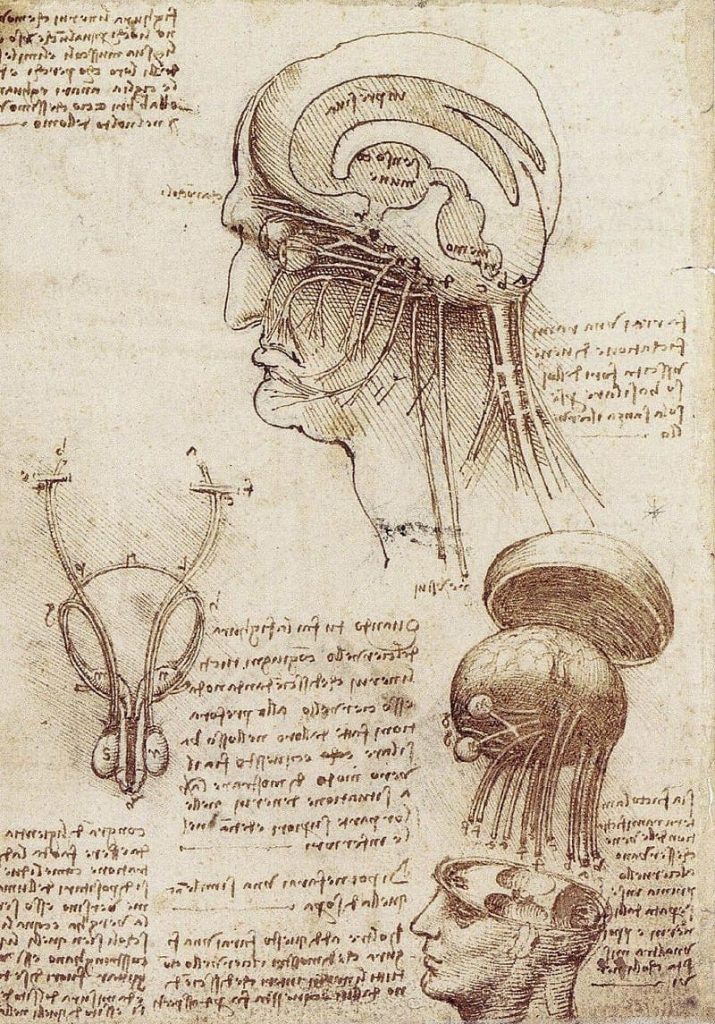
Leonardo’s interest in science and engineering led him to study a wide range of subjects, including mathematics, anatomy, geology, and botany. He created detailed drawings and diagrams of human anatomy, birds, and plants, and conducted experiments in hydraulics, optics, and flight.
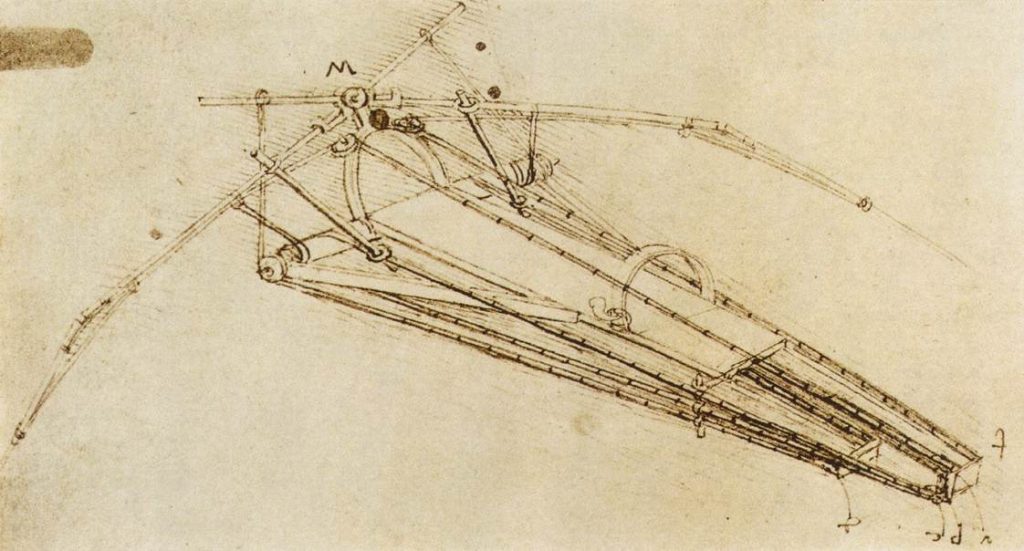
One of his most famous inventions was the flying machine, which he designed based on the anatomy of birds. Although he never built a working model, his design was ahead of its time and is still admired by engineers today.
Other notable inventions include a mechanical knight, a self-propelled cart, and a machine for cutting threads in screws. He also studied the properties of light and created many beautiful drawings and paintings that showcase his knowledge of optics.
A design for a flying machine by Leonardo da Vinci
Physiological sketch of the human brain and skull by Leonardo da Vinci
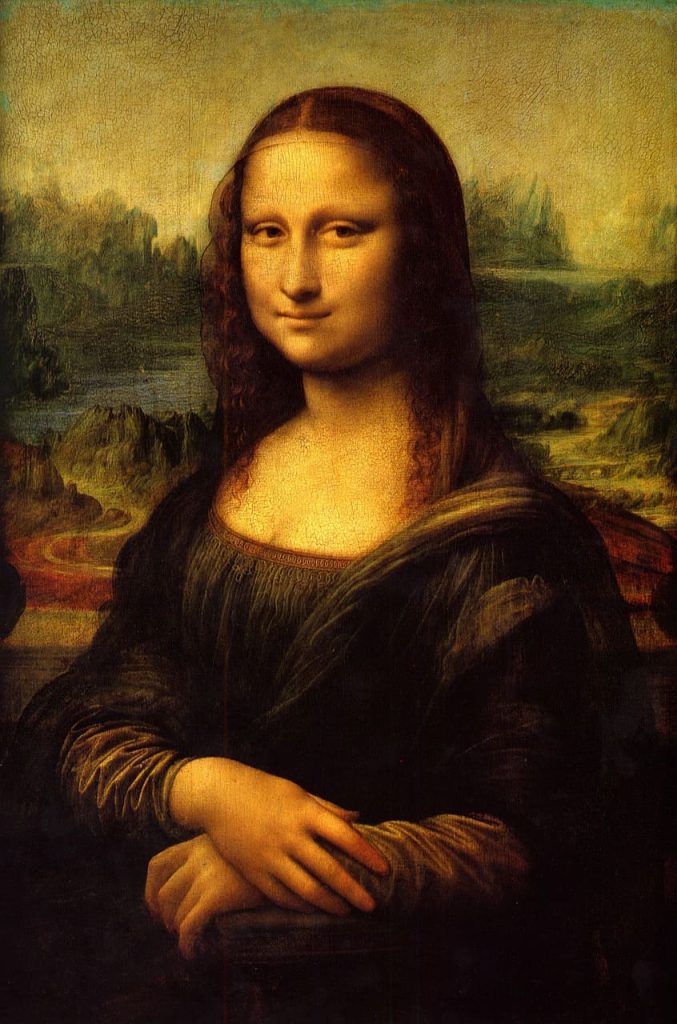
Mona Lisa
In 1503, Leonardo was commissioned by a wealthy Florentine merchant to paint a portrait of his wife, Lisa Gherardini. The painting, known as the «Mona Lisa,» is now one of the most famous works of art in history.
Leonardo spent several years working on the painting, which depicts a woman with a mysterious smile. He used a technique called «sfumato,» which involves blending colors to create a soft, hazy effect. The painting is notable for its lifelike depiction of the subject, as well as its use of light and shadow.
Mona Lisa by Leonardo da Vinci
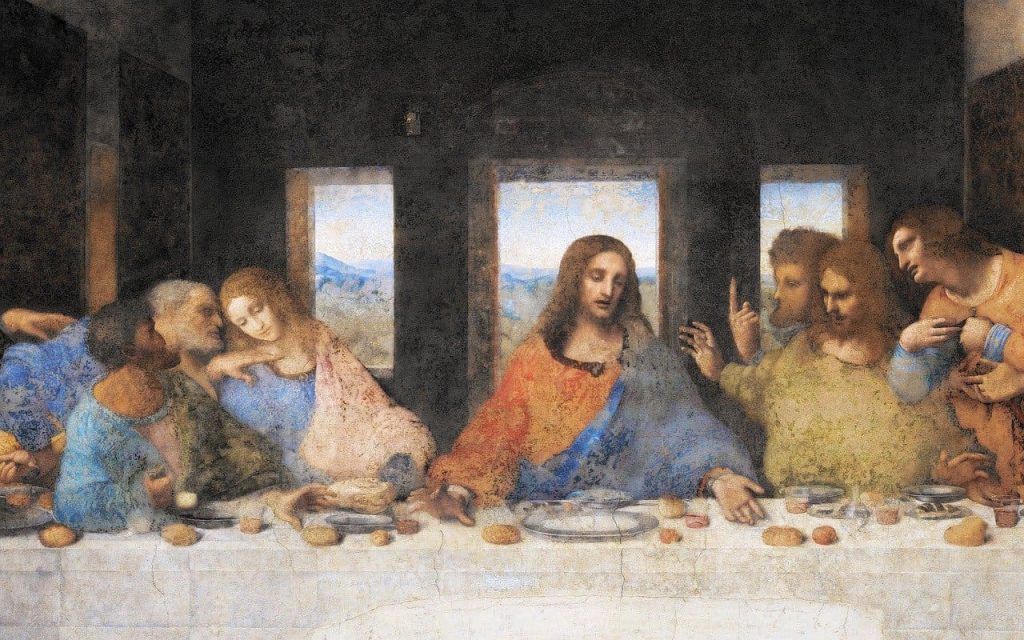
The Last Supper
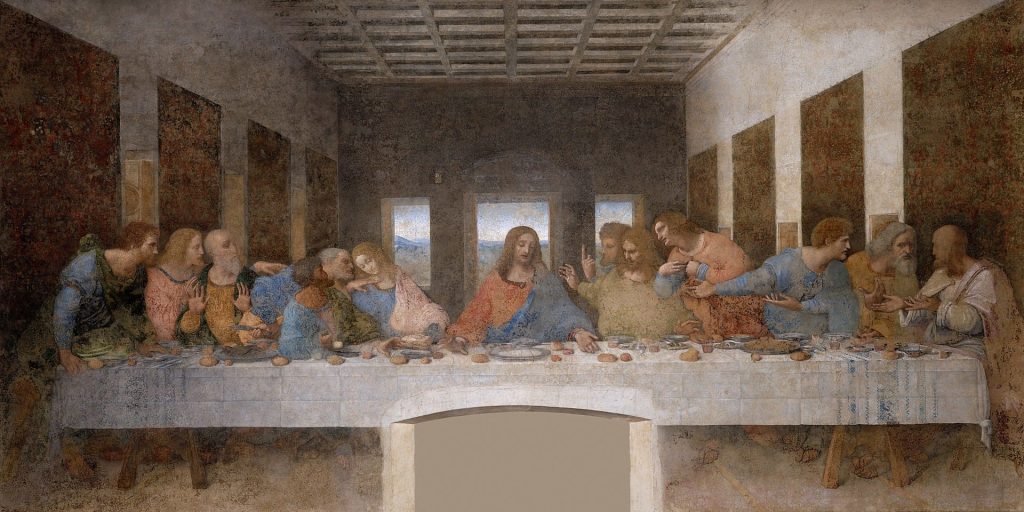
Another of Leonardo’s most famous works is «The Last Supper«, a painting depicting the final meal of Jesus with his disciples. The painting is notable for its large size (it covers an entire wall) and its use of perspective to create a sense of depth and space.
Leonardo worked on the painting for several years, experimenting with different techniques and materials. He used a type of paint called tempera, which dries quickly and allows for fine details, but is difficult to work with on a large scale. He also experimented with different types of varnish to protect the painting.
In his later years, Leonardo became increasingly interested in philosophy and spirituality. He wrote extensively on these subjects, and many of his writings were published after his death. He also continued to work on his art and science projects, although he was slowed down by his age and declining health.
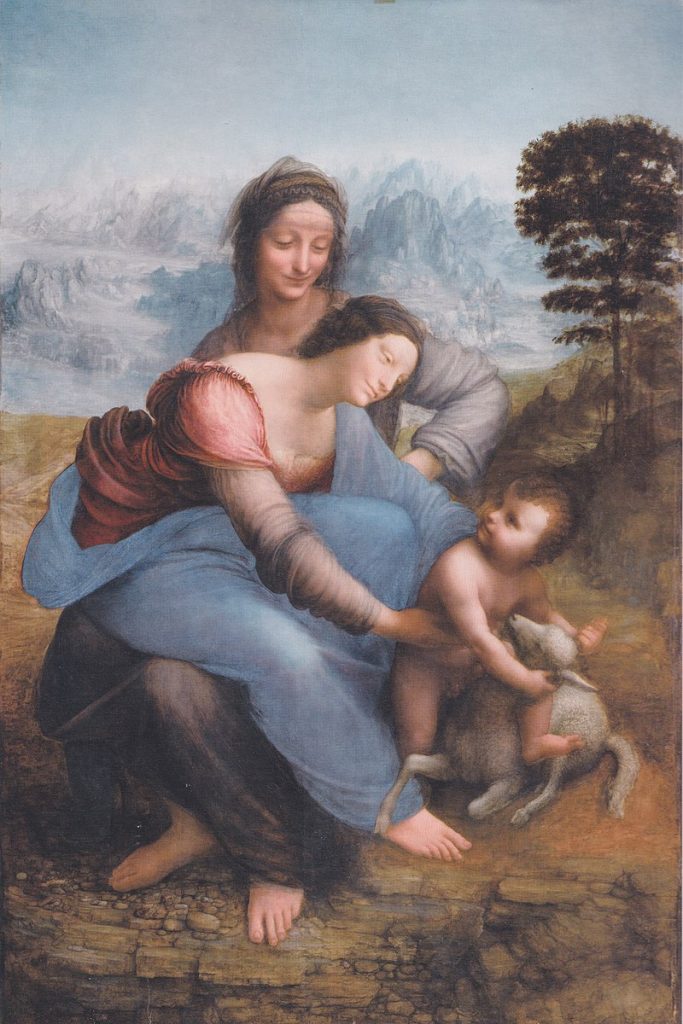
One of his last works was a drawing called «The Virgin and Child with St. Anne and St. John the Baptist.» The drawing, which is now in the Louvre Museum in Paris, is notable for its complex composition and beautiful details. Leonardo worked on the drawing for many years, making numerous sketches and studies before completing the final version.
The Virgin and Child with Saint Anne by Leonardo da Vinci
Death and Legacy
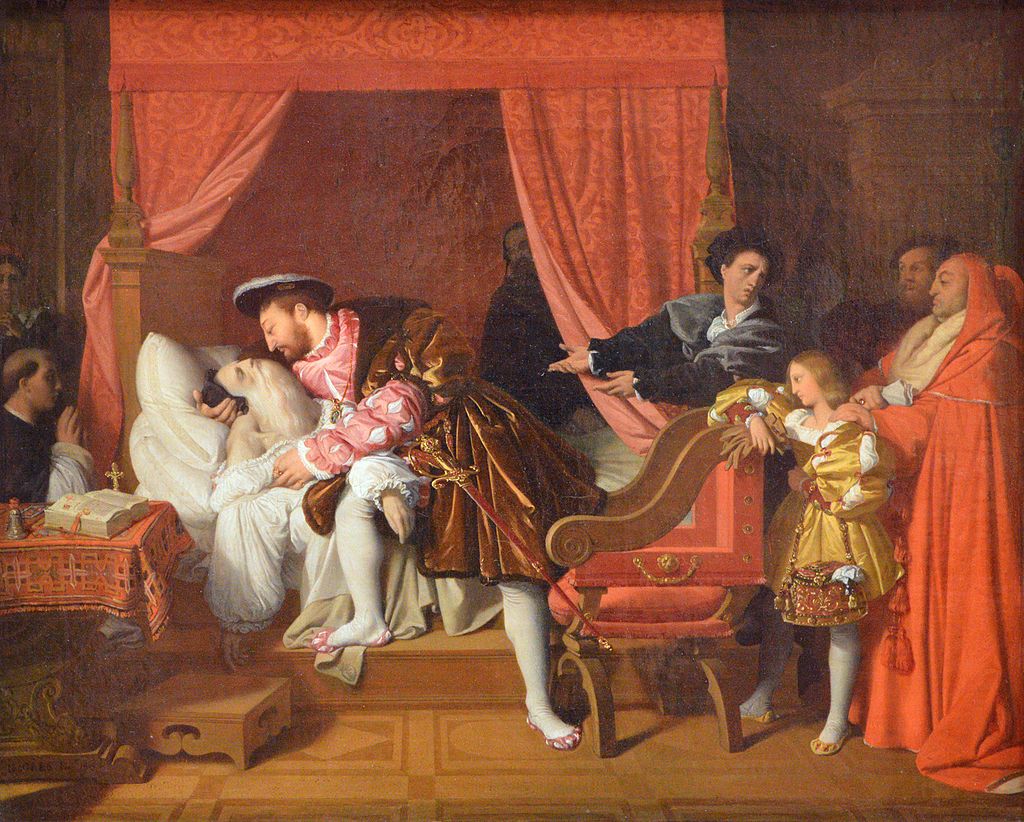
Leonardo da Vinci died in 1519 at the age of 67. He was buried in the chapel of Saint-Hubert at the Chateau d’Amboise in France, where he had spent the last years of his life. His legacy, however, lives on to this day.
Leonardo’s works have inspired countless artists, scientists, and engineers over the centuries. His unique combination of artistic talent and scientific knowledge was ahead of its time, and his contributions to a wide range of fields continue to be studied and admired.
The Death of Leonardo da Vinci, by Ingres, 181
Anecdotes
As mentioned earlier, Leonardo’s life was full of interesting events and anecdotes. Here are a few more examples:
When Leonardo was working on «The Last Supper,» he became frustrated with his inability to create the perfect face for Jesus. He searched the streets of Milan for weeks, looking for the perfect model, but could not find anyone who met his criteria. Eventually, he settled on a young man from a nearby church who had a serene and peaceful expression.
Leonardo was known for his love of animals, and he often kept pets in his studio. He once purchased a caged bird in order to study its flight patterns. After a few days, he decided to set the bird free, saying that he could not bear to see it in captivity any longer.
Leonardo was a skilled musician and often played the lyre and other instruments. He once played for the Duke of Milan, who was so impressed that he gave Leonardo a silver lyre as a gift.
Leonardo was also known for his sense of humor. He once painted a portrait of a woman with a grotesquely long nose, and then placed the painting in a public square where it caused a great deal of amusement and laughter.